Improve Your Mouth’s Functionality with Dental Implants
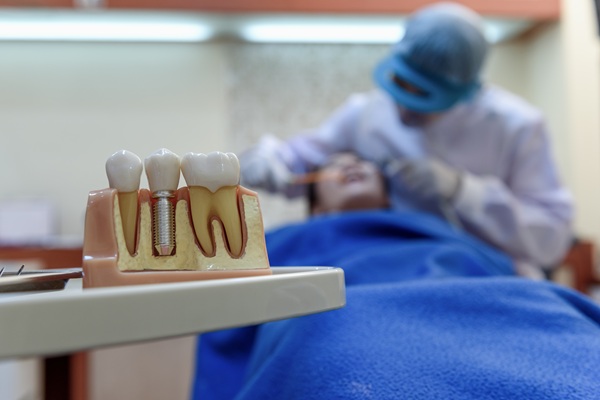
Dental implants are devices, usually made with titanium, that fuse with the jawbone and replace natural tooth roots. A common reason to get an implant is tooth loss due to tooth decay, gum disease, or an injury to the mouth. Some patients report that dental implants are a more natural-feeling alternative to full or partial dentures and enjoy not having to remove the implants to clean the way that they would need to with dentures.
Many dentists recommend implants to patients who are good candidates for the treatment because they can help prevent bone loss in that area. When a permanent tooth is lost or removed, the roots no longer stimulate the bone tissues of the jaw underneath. This can lead to a deterioration of the jaw bone, resulting in weakness or damage over time. Because implants are attached to the bone, they help prevent this type of deterioration, reducing the risks of other complications from developing, such as fractures or changes in face shape.
Dental implants are a permanent solution to tooth loss. With proper care, the treatment can last for a lifetime. This treatment approach can greatly enhance the look of your smile, while offering many other benefits, including improved dental function.
How dental implants can improve your mouth's functionality
To be a good candidate for dental implants, you should be in good general health. Having a dental implant placed in your mouth requires you to undergo surgery where the device is placed on your jaw. Patients can expect to wait several weeks or months before the area heals completely. After undergoing surgery, many people with dental implants report seeing several benefits.
Improved speech
Teeth, along with the lips and tongue, are used to pronounce different letters and sounds while speaking, so tooth loss can affect the way a person speaks and make talking difficult. Dental implants replace these missing teeth in a way that fits your mouth naturally and comfortably, allowing you to speak as you did before experiencing tooth loss.
While patients can see some speech improvement with dentures, dentures are prone to slipping around the mouth if not properly fitted, still causing difficulty with speaking. Dental implants avoid this issue since they are affixed to your mouth.
Improved eating habits
Teeth are necessary for ripping, biting, and chewing many foods. The loss of several teeth can make it difficult to find foods to comfortably eat, leading to an imbalanced and unhealthy diet. Unlike some dentures, implants feel natural and imitate the function of natural teeth, allowing you to return to healthier eating habits. This, in turn, can help prevent further oral health issues in the future. With dental implants, you do not have to worry about food particles getting caught in the device and causing irritation to the gums. Furthermore, some dentures can affect the taste buds because they cover some of the surfaces of the roof of the mouth. With dental implants, you can fully taste and enjoy foods as you did before.
Improved oral health
Compared to getting a dental bridge to replace missing teeth, dental implants do not require the dentist to alter or reshape nearby teeth. The absence of these alterations can lead to a better outcome for the remaining teeth since they are left intact. Dental implants may be cleaned the same way that you brushed and flossed your natural teeth, so there is no learning curve on how to care for them the way there is with dentures. You can maintain a good cleaning routine with dental implants right from the beginning.
Conclusion
While there are many ways to deal with tooth loss, some options may offer you more perks in the long run. Consider these benefits to your mouth's functionality that come from dental implants when deciding between dentures, a bridge, or implants. Improvements to your speech, eating habits, and overall oral health are just a few of the ways that dental implants improve your mouth's functionality. Many other benefits can also make this treatment worthwhile, including improved oral health, lower risks for bone loss, and a natural-looking smile.
If you are interested in receiving dental implants, talk with your dentist to determine whether or not this treatment option is the right approach for you. If you are in good dental and overall health, can tolerate dental work, and do not smoke or grind your teeth, you may be a good candidate.
Request an appointment here: https://siegertdental.com or call Siegert Dental at (608) 394-3943 for an appointment in our Onalaska office.
Check out what others are saying about our dental services on Yelp: Dental Implants in Onalaska, WI.
Related Posts
An implant dentist is a dental professional who specializes in dental implant care. They can help their patients understand how important it is to keep up with good oral hygiene to extend the longevity of their dental implants. Although implants are strong and not prone to decay, they still need regular care to avoid problems…
Dental implants are a long-term solution for missing teeth, but their longevity depends on proper care and professional maintenance. An implant dentist can help ensure dental implants remain in optimal condition for many years to come. Seeking an implant dentist’s care can help extend the life of your dental implants and preserve your oral health.Routine…
Though dental implants are designed to be strong and long-lasting, they can still become damaged, but an implant dentist can assess the situation and provide the right solution. When you understand what causes implant damage, you can take steps to prevent it. Recognizing signs of a damaged implant and seeking prompt treatment is crucial to…
An implant dentist focuses on placing and caring for artificial tooth roots that hold replacement teeth in position. Dental implants can be a long-lasting solution for individuals who have lost teeth due to decay, injury, or other oral health concerns. Although implants can remain functional for many years, consistent attention is crucial to preserve their…