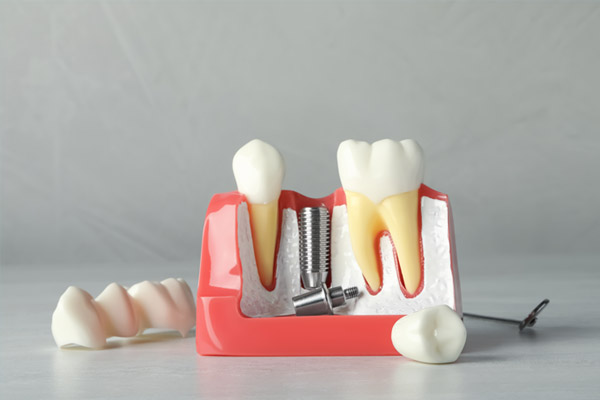
One of the requirements for a patient to be able to get a dental implants procedure is that the patient must have sufficient jaw bone to anchor the implant. Some patients who do not have adequate bone mass may be able to get implants by first having a bone graft procedure.
What is a dental bone graft?
A dental bone graft procedure can increase the density and volume of the jaw so that a patient can have a dental implants procedure. The procedure involves either taking material from elsewhere on the patient's body or purchasing it from a human or animal tissue bank. Alternatively, some bone grafts may be performed using synthetic material.
How a bone graft works
A dentist places the graft material in areas of the jaw where bone loss has occurred. The grafted material stimulates the patient's bone tissue to grow resulting in thicker and harder bone. The dentist may use platelet-rich plasma to promote tissue healing and regeneration. It may take several months for enough new bone to grow to support the implants. Patients who require only minor grafting may be able to have the graft done at the same time as the implant surgery.
Types of bone grafts
There are four main types of dental bone grafts:
- Socket preservation involves placing graft material in the tooth socket after a tooth extraction to fill the space and prevent the sides from collapsing.
- When the upper back teeth are missing, the sinuses may drop down into the space formerly occupied by the teeth roots. This prevents dental implants from being placed because the implants would pierce the sinus membrane. A sinus lift uses a bone graft to move the sinus back to its original position.
- Ridge augmentation is used to increase the volume and width of a jawbone that has thinned because of teeth that have been missing for an extended period.
- Periodontal bone grafts are used to support teeth that are loose because of erosion caused by gum disease.
Bone graft procedure
The dentist starts by numbing the area with a local anesthetic. The dentist then makes a small incision in the gums and moves the gums a small amount to expose the jawbone. The dentist cleans and disinfects the graft site and then adds the grafting material. The graft may be covered with a membrane before the gum tissue is moved back into place and the incision is stitched closed.
Who requires a dental bone graft?
Chewing exerts pressure on the jaw bone. For dental implants to hold up to that pressure, there must be enough jaw bone to support the implant. A person who wants to have implants but has a jawbone that is either too thin or soft because of bone loss may need a bone graft procedure.
Conclusion
Dental bone grafts make it possible for patients who would otherwise not be able to have dental implants placed to have implant procedures. If you are unable to have dental implant surgery because of issues with your jawbone, a bone graft may be an option for you.
Request an appointment or call Siegert Dental at 608-394-3943 for an appointment in our Onalaska office.
Related Posts
Dental implants are an option for people who need to replace one or more missing teeth. The process involves several steps during which a metal post is surgically mounted into the jaw. The replacement tooth or crown is then secured to the implant, holding the new tooth firmly in place.Missing teeth can have an adverse…
According to the American Dental Association, dental implants are stable because the jawbone grows around them. This process is known as osseointegration, and it is essential for the success of an implant. Several elements can affect this process, and patients undergoing the dental implant procedure should understand what affects an implant fusing to the bone.…
If you are missing one or more permanent teeth, dental implants may be an option for replacing them. Placing the implants requires an operation, and not everyone is a candidate for the surgery. Your dentist can discuss the criteria you must meet to be eligible. If you do not meet the criteria now, it may…